Forge.ai
Your software, built, tested & documented — autonomously.
It began with a problem on our Iris-AI project: the docs went stale the moment we shipped. So we made the code the source of truth. Then we extended that engine into a virtual AI workforce that writes the code, deploys it, proves it works, and keeps the docs alive. Hand it a requirement — or point it at an existing repo — and it takes it from there.
The whole team — and the whole lifecycle — automated.
AI workforce
A developer for every role — frontend, backend, infra, QA, docs. No humans required.
Every test, generated & run
UI · security · penetration · performance · data — created and executed against the live app.
Bugs auto-created & fixed
A failing test becomes a bug ticket — then the developer fixes it and re-verifies, on a loop.
Docs generated
Living documentation straight from the code — internal & customer-facing.
From your phone
No real developers. No laptops. Run the entire workforce from a mobile app.
Plan → Build → Deploy → Test → Document — on a loop.
A workforce of virtual developers, each with a real role, carries every task all the way through — and loops back the moment a test fails.
Plan
Reads a requirement or repo → right-sized work items with priorities & dependencies.
Build & validate
Role-based devs write the code, run it, raise a Jira ticket, mark it done.
Deploy
Ships to the target environment — local, or Kubernetes for production.
Test on live env
UI · security · penetration · performance — generated & executed, each with a pass/fail contract.
Document
Living docs from the code — internal engineering & customer-facing.
The same framework, scoped per task.
Build & Ship
An AI workforce with real roles turns requirements into deployed code — each task validated before it's called done.
Test & Prove
A full test matrix — every case with an explicit pass/fail contract — executed against the live app to surface real bugs.
Document
Documentation generated from the code and updated incrementally on every change — internal & customer-facing.
One harness. Every surface.
The surface you use — web, mobile, Slack, Jira — is disposable. The harness underneath is the asset: an owned, portable core that plans, builds, tests, gates every run on evidence, and reports back to wherever your team already works. Ask on any surface — or let it listen to your Jira support queue and resolve the ticket itself.
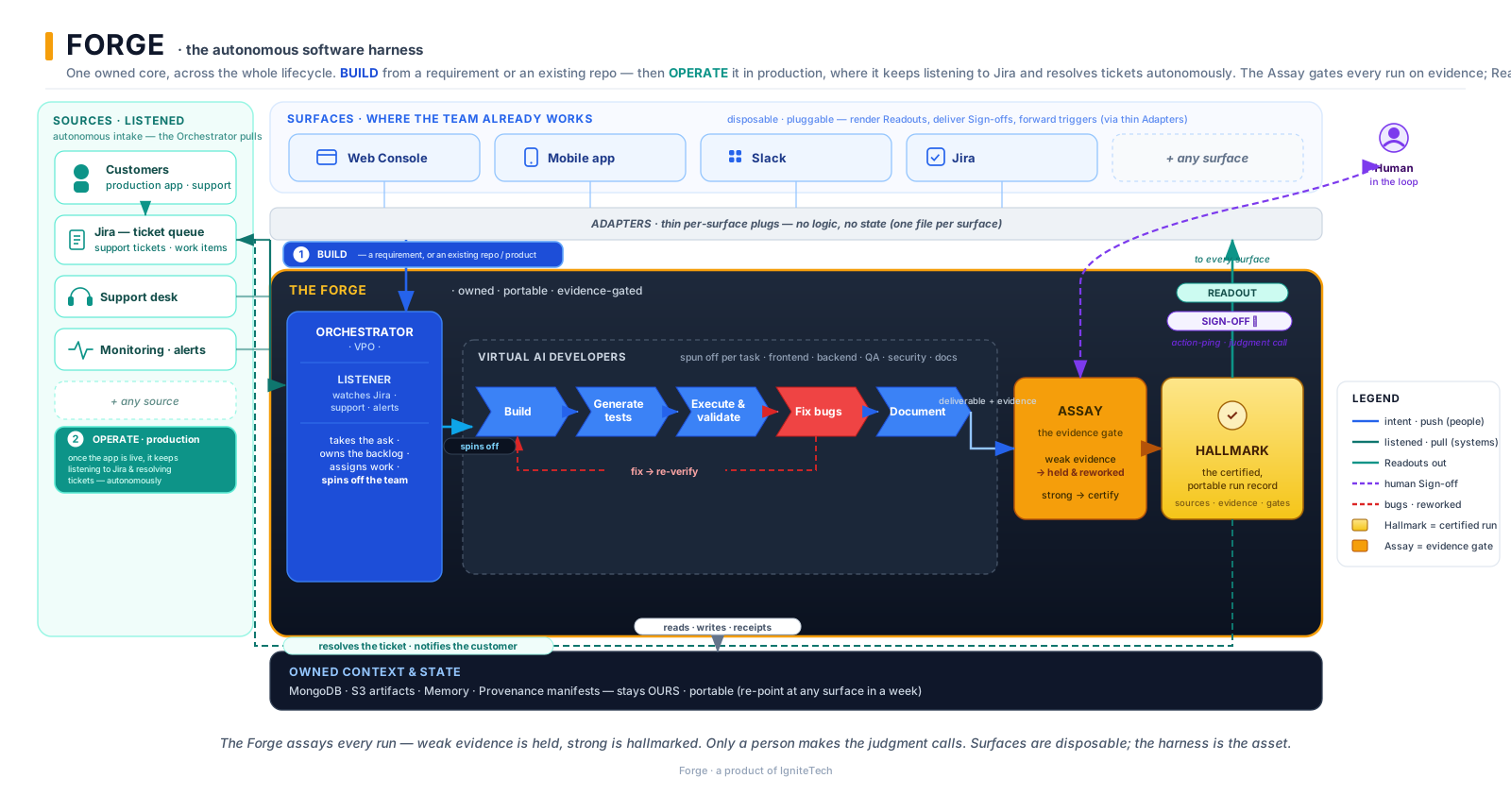
The owned, portable core — plans, builds, tests, gates. Not a place you go; it's what makes the agent in the channel actually competent.
The evidence gate. Weak evidence is held & reworked; strong evidence is certified — the Forge clears it itself.
The certified, portable run record — sources, evidence, gates. Only a hallmarked run reads as “done.”
The human gate — the judgment calls, delivered as an action-ping to whatever surface you're on.
What a surface renders — the same run, shown natively in Slack, on mobile, on the web, or as a Jira comment.
The thin per-surface plug — one small file per surface. A new surface never touches the core.
Not a mockup.
Build. Deploy. Test. Document. Autonomously — from anywhere.
Point it at a requirement, or at what you already have.
Log in to the console